
Chats
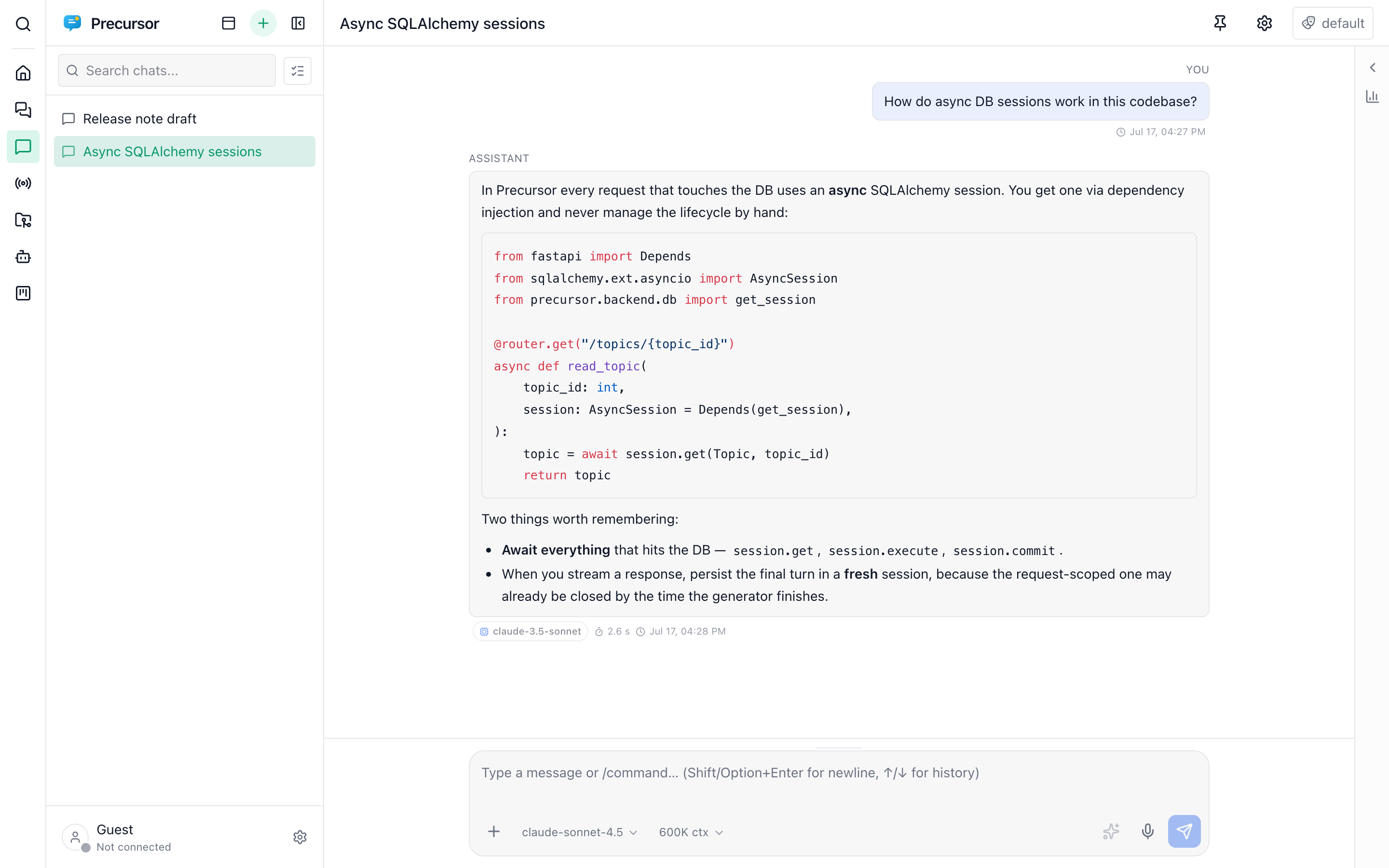
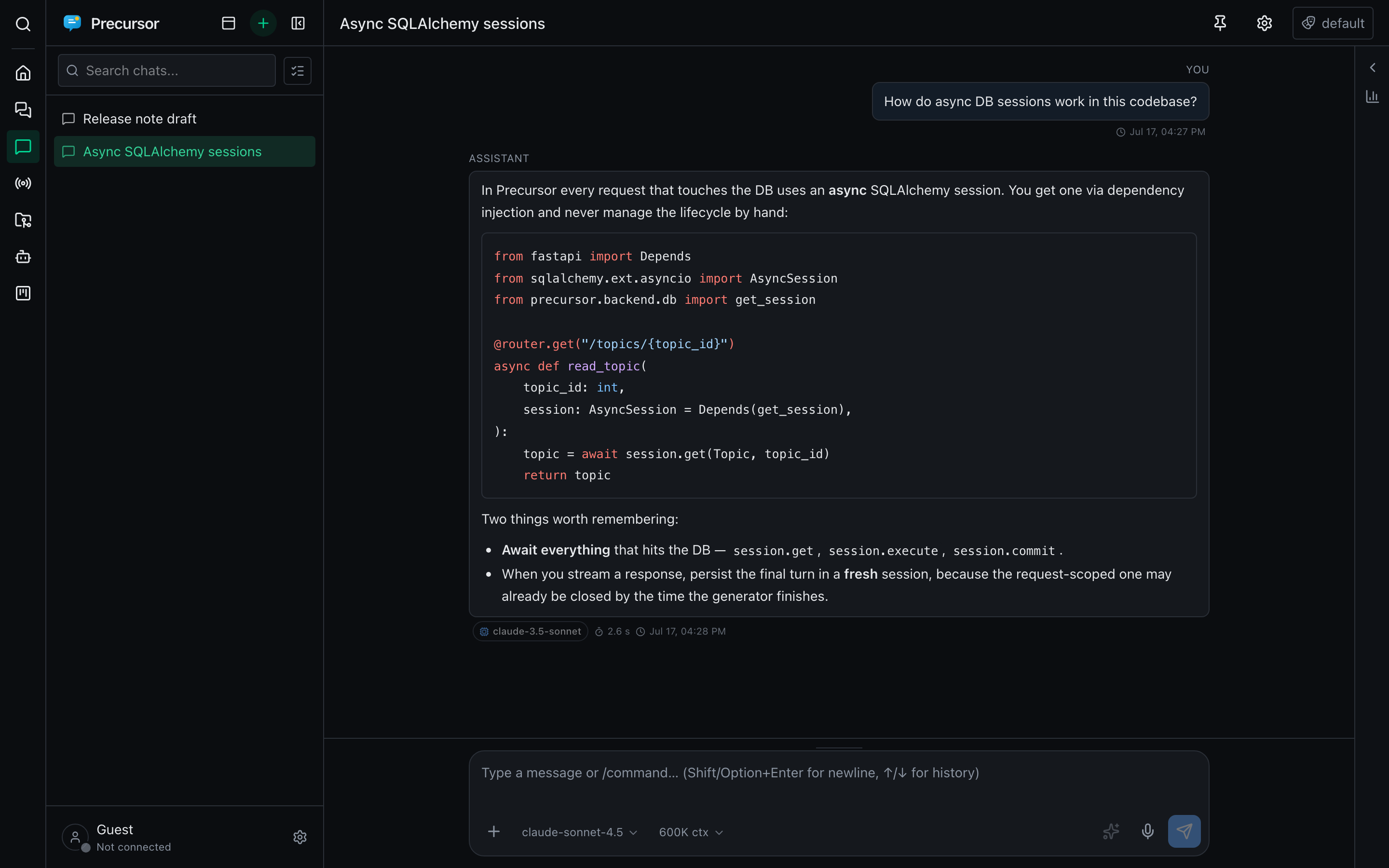
Chats are quick, throwaway conversations — for when you just need an answer and don't want the ceremony of a topic. Type a prompt and get going in seconds.
When to use a chat vs a topic
| Chat | Topic | |
|---|---|---|
| Lifespan | Throwaway | Long-lived |
| GitHub issue link | — | Optional, used as live context |
| Tree nesting | — | Yes |
| Scheduling / reminders | — | Yes |
| Best for | A one-off question | A tracked thread of work |
Reach for a chat to draft a message, explain an error, or brainstorm. Reach for a topic when the conversation is part of ongoing work you'll return to.
Same rich composer
Chats share the same conversation experience as topics:
- Streaming replies over Server-Sent Events with live markdown rendering.
- Mermaid diagrams, fenced code blocks, and syntax highlighting.
/slash commands, including skills and the memory commands (/memory-store,/memory-list,/memory-update).- Attachments — images as vision input, PDF / DOCX / PPTX text-extracted.
- MCP tools — the same enabled tool servers, with tool calls shown inline.
- Long-term memory is injected into chats too, so your standing preferences and facts follow you here as well.
- Failed turns surface as a red error notice with a Retry button on the prompt that failed — see when a turn fails.
Chats name themselves
A new chat starts as "New chat" — which, after a busy afternoon, leaves a sidebar full of rows you can't tell apart. So Precursor names it for you: as soon as you send the first message, a short side request derives a title from what you asked and renames the chat in place.
It runs alongside the answer rather than after it, so the name usually lands while the reply is still streaming — you never wait on it. If the model is unreachable or returns something unusable, the placeholder simply stays; naming never delays or fails the turn it rides along with.
A title you set always wins. Rename a chat — from the sidebar's right-click menu, the header, or /rename — and auto-naming steps aside for good, even if a naming request was already in flight.
Only the title changes. Chats are addressed by a stable id in their URL, so a rename never breaks a link you've already opened or shared.
/suggest-name
To re-name a conversation later — the opening question turned out not to be the point, or you want a tidier title before archiving — run:
/suggest-nameIt reads the conversation so far and renames it. Available in both chats and topics (topic slugs are left untouched too, so existing links keep resolving).
Turning it off
Settings → Chat → Auto-naming disables it, and lets you point naming at a specific model. Naming is a one-line request, so a small fast model is usually the better choice; leave it on Use default chat model to reuse your main one. /suggest-name keeps working either way.
Unread badges & notifications
Chats — like topics and agents — track unread activity. When a reply arrives while you're looking elsewhere, the chat's row shows an unread count, the sidebar tab highlights, and (when notifications are enabled and the window is unfocused) a browser notification fires. Opening the chat clears its badge.
Right-click a chat in the left sidebar to rename, pin, set a reminder, open /notes, or archive it.